The Day of the LORD
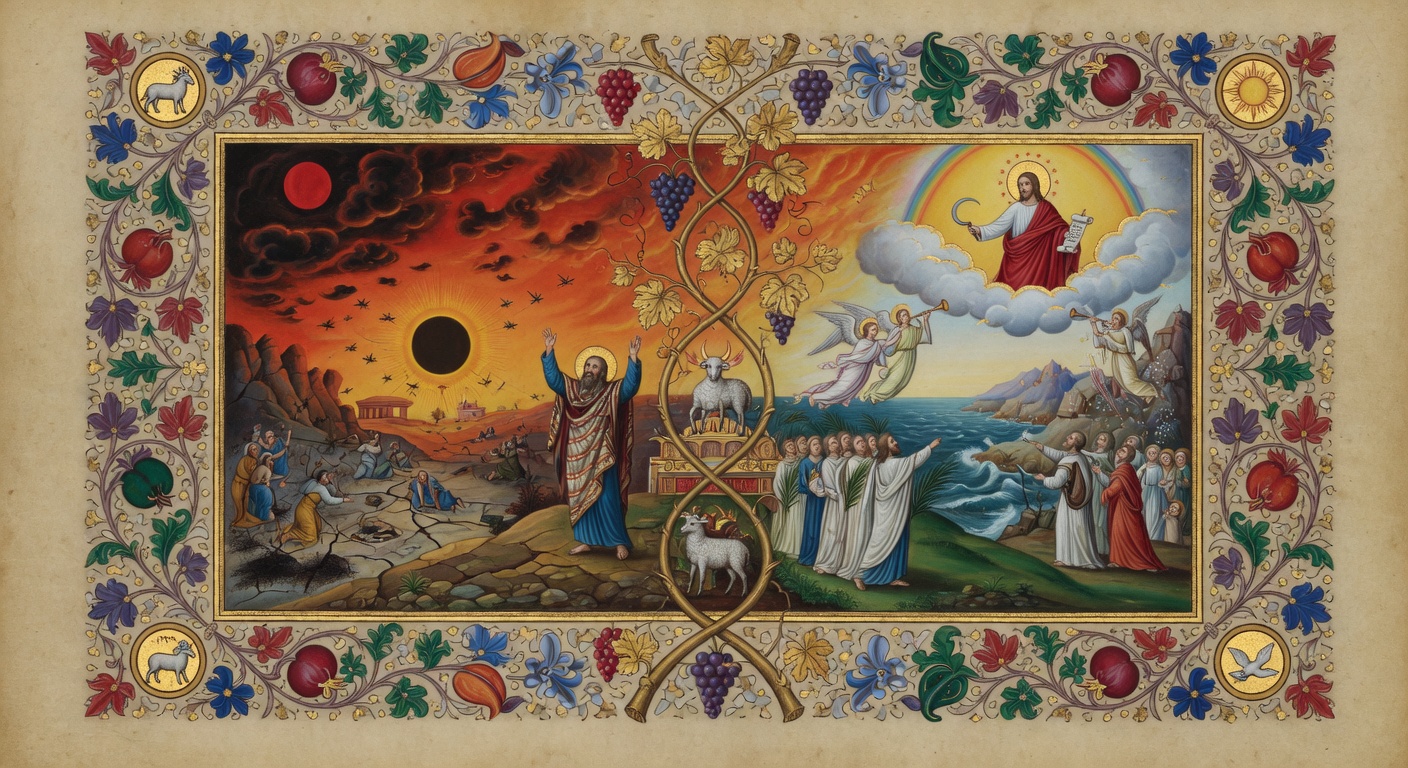
In the prophetic writings the Day of the LORD appears as the appointed time when the Lord intervenes to judge the wicked and to rescue those who turn to him in repentance. Drawing from Joel's portrayal of darkness, fire, and the pouring out of the Spirit upon all flesh, this event highlights God's sovereign control over history and his commitment to both justice and salvation. It forms a key thread in the redemptive story, pointing toward the final vindication of God's people and the establishment of his kingdom.
Key Chapters
Key Passages
Joel's Prophecy
Joel 2:31-32
This passage offers hope by assuring that anyone who calls on the Lord's name will be saved amid coming judgment.
 31he sun shall be turned into darkness, and the moon into blood, before the great and the terrible day of the LORD come.
Day of the Lord
2 Peter 3:10
This passage reminds us that Christ's sudden return will bring judgment and renewal, urging us to live holy lives in hopeful anticipation.
 10ut the day of the Lord will come as a thief in the night; in the which the heavens shall pass away with a great noise, and the elements shall melt with fervent heat, the earth also and the works that are therein shall be burned up.
Did You Know?
The prophets spoke of the Day of the LORD as both terrifying and wonderful. It would be darkness for the proud and light for the humble. The same event, two different outcomes.
Joel described it as a day of clouds and thick darkness. Zephaniah called it a day of wrath and distress. Yet Malachi said the Sun of Righteousness would rise with healing in His wings.
Peter said the Day of the Lord will come like a thief. The early church lived in eager expectation, not terror. They longed for the appearing of the One who would set all things right.