The Vine and the Vineyard
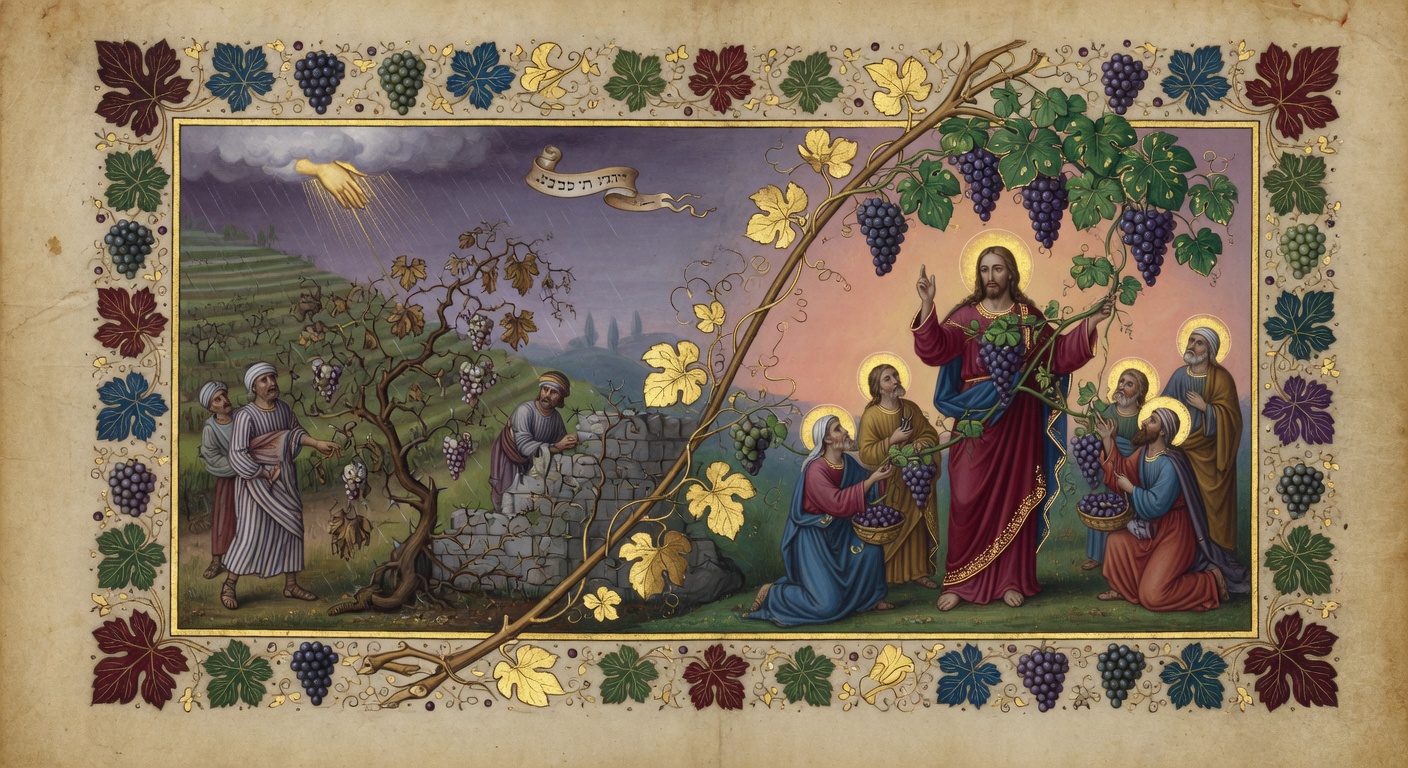
In the Song of the Vineyard the prophet portrays Israel as a choice plant set in fertile soil and hedged about by divine care, yet yielding only wild grapes that bring forth a sentence of desolation and removal. Jesus takes up this same image when He declares Himself the true vine, with His disciples as branches that must abide in Him if they are to bear fruit that remains. The contrast reveals the heart of redemption, moving from the covenant nation's failure under the old economy to the fruitful union now offered in Christ alone.
Key Chapters
Key Passages
Song of the Vineyard
Isaiah 5:1-7
Isaiah's parable portrays Israel as God's carefully tended vineyard that produces only wild grapes - a devastating picture of spiritual failure despite divine investment.
Isaiah sings of God's vineyard (Israel) that produced wild grapes despite every care, resulting in judgment.
 1ow will I sing to my wellbeloved a song of my beloved touching his vineyard. My wellbeloved hath a vineyard in a very fruitful hill:
I Am the True Vine
John 15:1-8
Jesus claims to be what Israel failed to be - the true vine that produces genuine fruit, with the Father as the gardener who prunes for greater fruitfulness.
Jesus identifies Himself as the true vine and His Father as the gardener, calling disciples to abide and bear fruit.
 1 am the true vine, and my Father is the husbandman.
Did You Know?
Jesus used the vine as a picture of the intimate, life-giving connection between Him and His followers.
In the Old Testament, Israel is often portrayed as God's vine or vineyard.
Fruitfulness depends entirely on abiding in Christ. 'apart from me you can do nothing.'