Beersheba
Ask about Beersheba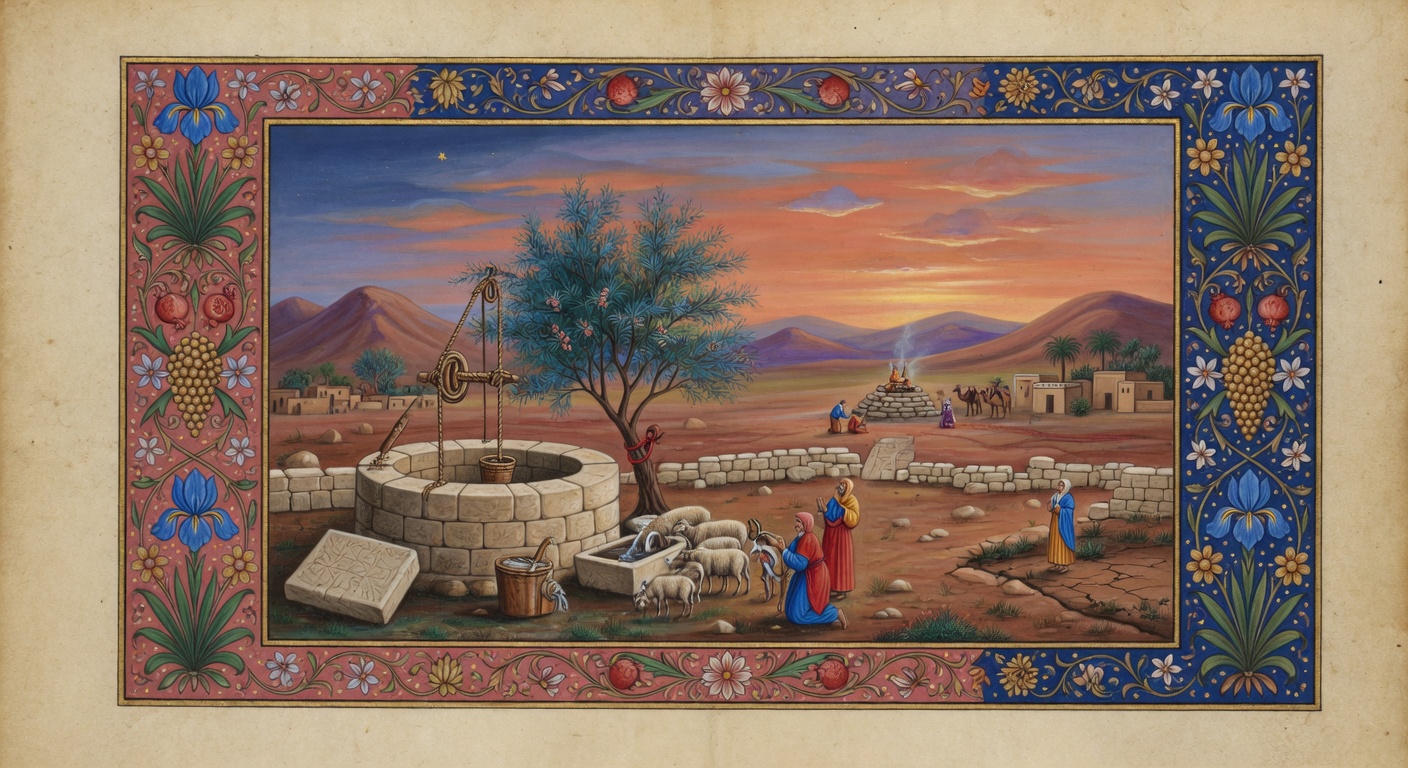
Beersheba served as the traditional southern boundary of ancient Israel, frequently paired with Dan in the north to define the full extent of the Promised Land. It is notably associated with Abraham, who dug a well there and entered into a covenant with King Abimelech, naming the site Beersheba to commemorate their oath. The location also witnessed divine encounters and worship for Isaac and Jacob, who reaffirmed covenants and offered sacrifices, underscoring God's ongoing faithfulness to the patriarchs. As a recurring site of wells, oaths, and revelation, Beersheba holds enduring significance in Scripture as a marker of territorial identity and divine promise.
Details
- Region
- Canaan
- Modern Location
- Be'er Sheva, southern Israel
Journey Paths
Key Passages
Abraham's Covenant at Beersheba
Genesis 21:22-34
Abraham makes a treaty and digs a well here, naming it 'well of the oath' - establishing a southern boundary marker for the Promised Land.
 22nd it came to pass at that time, that Abimelech and Phichol the chief captain of his host spake unto Abraham, saying, God is with thee in all that thou doest:
God Appears to Isaac
Genesis 26:23-25
God confirms the Abrahamic covenant to Isaac at Beersheba - demonstrating that the promises pass to the next generation by divine initiative.
23nd he went up from thence to Beersheba.
Jacob Leaves for Haran
Genesis 28:10
Jacob departs from Beersheba fleeing Esau's wrath - leaving the Promised Land as a fugitive but carrying God's covenant promises with him.
10nd Jacob went out from Beersheba, and went toward Haran.
Did You Know?
Beersheba served as the traditional southern boundary of ancient Israel, frequently paired with Dan in the north to define the full extent of the Promised Land.
It is notably associated with Abraham, who dug a well there and entered into a covenant with King Abimelech, naming the site Beersheba to commemorate their oath.
The location also witnessed divine encounters and worship for Isaac and Jacob, who reaffirmed covenants and offered sacrifices, underscoring God's ongoing faithfulness to the patriarchs.