Succoth
Ask about Succoth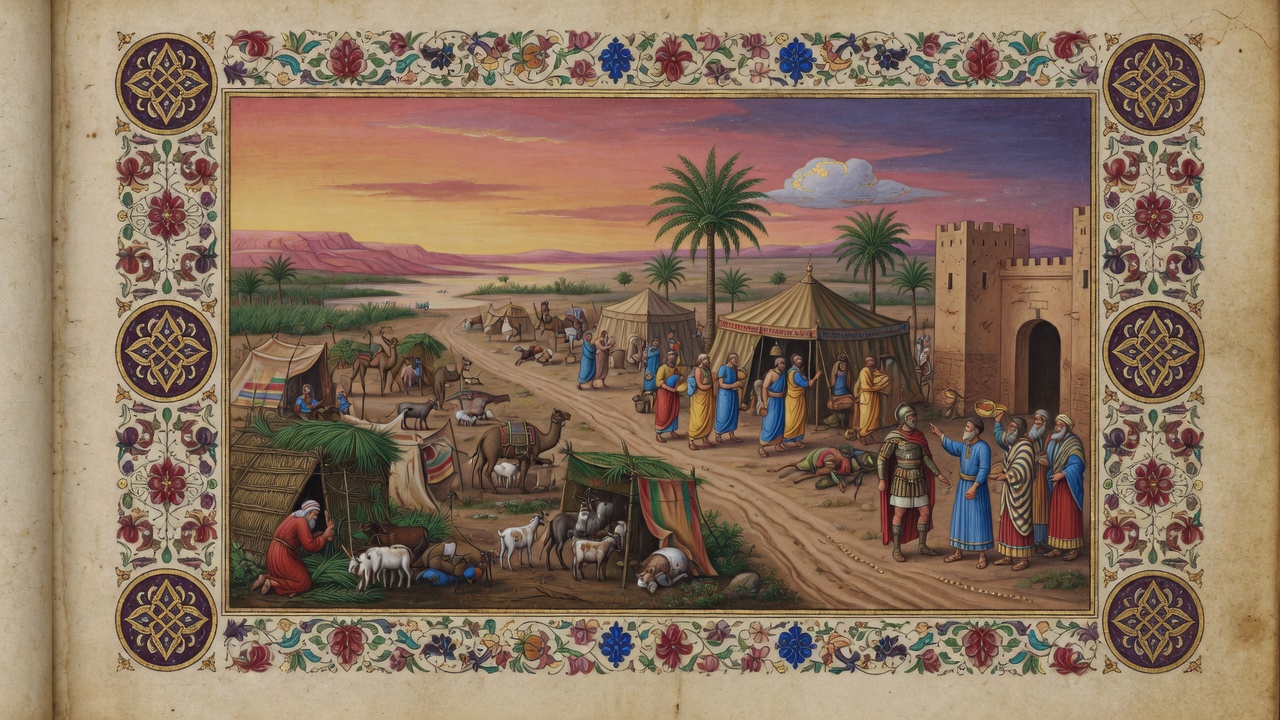
Succoth, meaning "booths" or "shelters," was the place where Jacob built shelters for his livestock after his reconciliation with Esau, giving the site its name. Generations later it was also the first stop of the Israelites' Exodus journey after leaving Rameses in Egypt. During the period of the Judges, the men of Succoth refused to provide bread for Gideon's exhausted army as they pursued the fleeing Midianite kings, mocking his chances of victory - a refusal Gideon avenged after his triumph by punishing the city's elders severely, a stark reminder of the real consequences of refusing help to God's appointed deliverer in his moment of need.
Details
- Region
- Transjordan
- Modern Location
- Tell Deir 'Alla, Jordan (approximate)
Key Passages
Jacob Builds Shelters at Succoth
Genesis 33:17
The name Succoth, meaning booths, commemorates the temporary shelters Jacob built here for his livestock after reconciling with Esau.
 17nd Jacob journeyed to Succoth, and built him an house, and made booths for his cattle: therefore the name of the place is called Succoth.
Succoth Refuses Gideon
Judges 8:5-7
The city's refusal to aid Gideon's exhausted army, and his promised punishment, shows the cost of failing to support God's chosen deliverer.
5nd he said unto the men of Succoth, Give, I pray you, loaves of bread unto the people that follow me; for they be faint, and I am pursuing after Zebah and Zalmunna, kings of Midian.
Did You Know?
Succoth's name - 'booths' - is the same word as the Feast of Tabernacles (Sukkot), both commemorating temporary shelters.
Gideon punished Succoth's seventy-seven elders 'with thorns of the wilderness and briers' - the number preserved as if from the town's own records.
Solomon later cast the temple's great bronze vessels in the clay ground between Succoth and Zarethan - the ungenerous town became the temple's foundry.