Proverbs 13 KJV
Wisdom and Discipline
Wisdom and Discipline
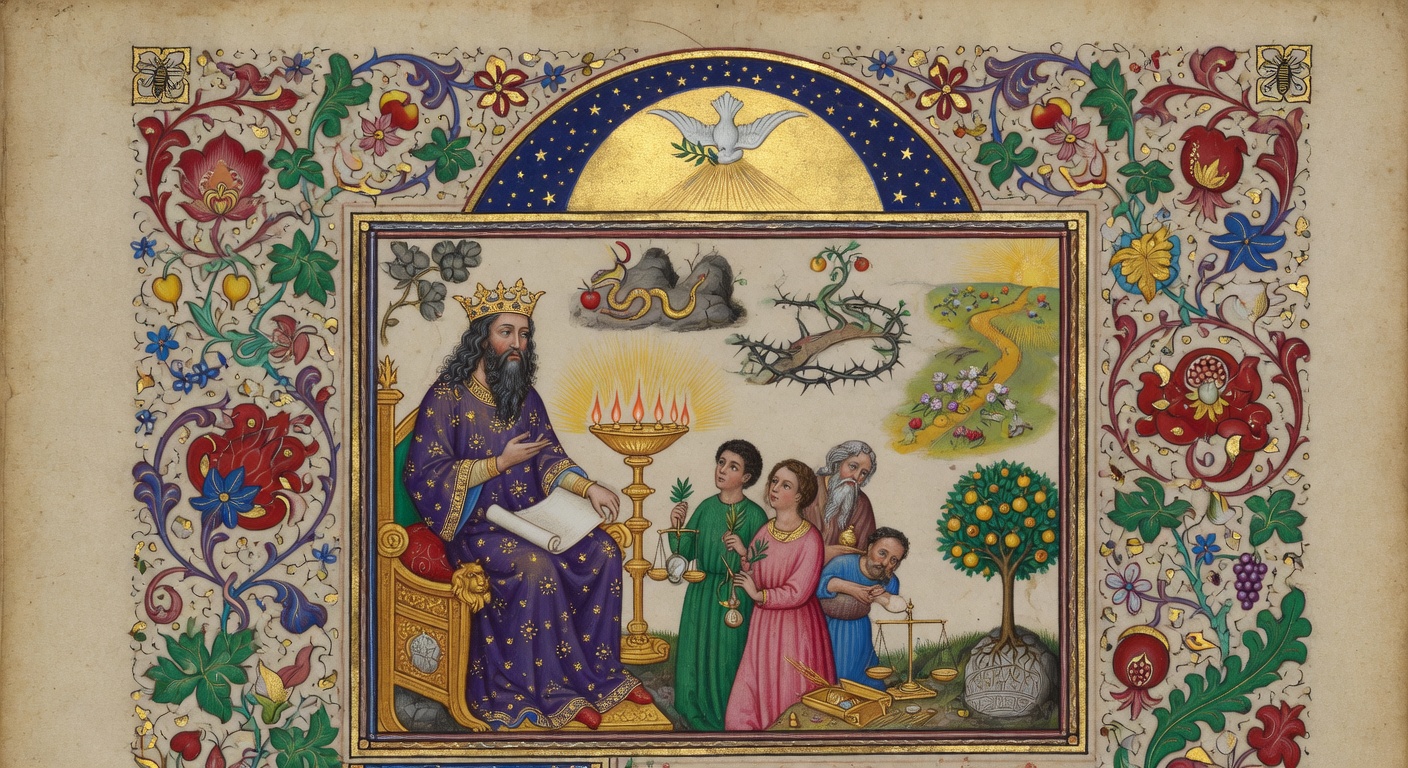
Proverbs 13:12's pairing of 'hope deferred' with heart-sickness and fulfilled desire as a 'tree of life' reworks the Edenic life-tree motif from Genesis to frame emotional longing as a theological drama of life versus death.
 1 wise son heareth his father’s instruction: but a scorner heareth not rebuke.
2 A man shall eat good by the fruit of his mouth: but the soul of the transgressors shall eat violence.
3 He that keepeth his mouth keepeth his life: but he that openeth wide his lips shall have destruction.
4 The soul of the sluggard desireth, and hath nothing: but the soul of the diligent shall be made fat.
5 A righteous man hateth lying: but a wicked man is loathsome, and cometh to shame.
6 Righteousness keepeth him that is upright in the way: but wickedness overthroweth the sinner.
7 There is that maketh himself rich, yet hath nothing: there is that maketh himself poor, yet hath great riches.
8 The ransom of a man’s life are his riches: but the poor heareth not rebuke.
9 The light of the righteous rejoiceth: but the lamp of the wicked shall be put out.
10 Only by pride cometh contention: but with the well advised is wisdom.
11 Wealth gotten by vanity shall be diminished: but he that gathereth by labour shall increase.
12 Hope deferred maketh the heart sick: but when the desire cometh, it is a tree of life.
13 Whoso despiseth the word shall be destroyed: but he that feareth the commandment shall be rewarded.
14 The law of the wise is a fountain of life, to depart from the snares of death.
15 Good understanding giveth favour: but the way of transgressors is hard.
16 Every prudent man dealeth with knowledge: but a fool layeth open his folly.
17 A wicked messenger falleth into mischief: but a faithful ambassador is health.
18 Poverty and shame shall be to him that refuseth instruction: but he that regardeth reproof shall be honoured.
19 The desire accomplished is sweet to the soul: but it is abomination to fools to depart from evil.
20 He that walketh with wise men shall be wise: but a companion of fools shall be destroyed.
21 Evil pursueth sinners: but to the righteous good shall be repayed.
22 A good man leaveth an inheritance to his children’s children: and the wealth of the sinner is laid up for the just.
23 Much food is in the tillage of the poor: but there is that is destroyed for want of judgment.
24 He that spareth his rod hateth his son: but he that loveth him chasteneth him betimes.
25 The righteous eateth to the satisfying of his soul: but the belly of the wicked shall want.
← → arrow keys to navigate chapters · spacebar to play/pause audio
Did You Know?
Proverbs 13:12's pairing of 'hope deferred' with heart-sickness and fulfilled desire as a 'tree of life' reworks the Edenic life-tree motif from Genesis to frame emotional longing as a theological drama of life versus death.
The chapter's repeated use of 'the law of the wise' (v. 14) treats torah not as Mosaic legislation but as the living teaching of sages, positioning human instruction itself as a protective fountain against death's snares.
Verse 7's economic paradox. Those who 'make themselves rich yet have nothing' versus those who 'make themselves poor yet have great riches'. Subverts surface-level prosperity by hinting at hidden spiritual ledgers familiar in ancient wisdom traditions.
The warning against 'opening wide' the lips (v. 3) connects speech restraint directly to physical survival, reflecting a broader ancient Near Eastern anthropology in which unguarded words were believed to unleash real, lethal forces.
By linking the 'rod' of discipline (v. 24) with hatred versus love, the chapter frames corporal correction not merely as pedagogy but as an expression of covenantal affection, inverting modern assumptions about parental leniency.
The Queen of Sheba traveled roughly 1,200 miles from her Arabian kingdom with a caravan of camels carrying spices, gold, and stones to test Solomon's wisdom with riddles, then exchanged lavish gifts including 120 talents of gold that funded further temple adornments.
David twice spared Saul's life in the wilderness, once cutting off a piece of his robe in the En Gedi cave and later removing his spear and water jug while he slept, demonstrating restraint amid pursuit.