Proverbs 22 KJV
A Good Name
A Good Name
The section beginning at 22:17 introduces a distinct collection of thirty sayings modeled on the Egyptian Instruction of Amenemope, evidencing direct literary borrowing from New Kingdom wisdom traditions.
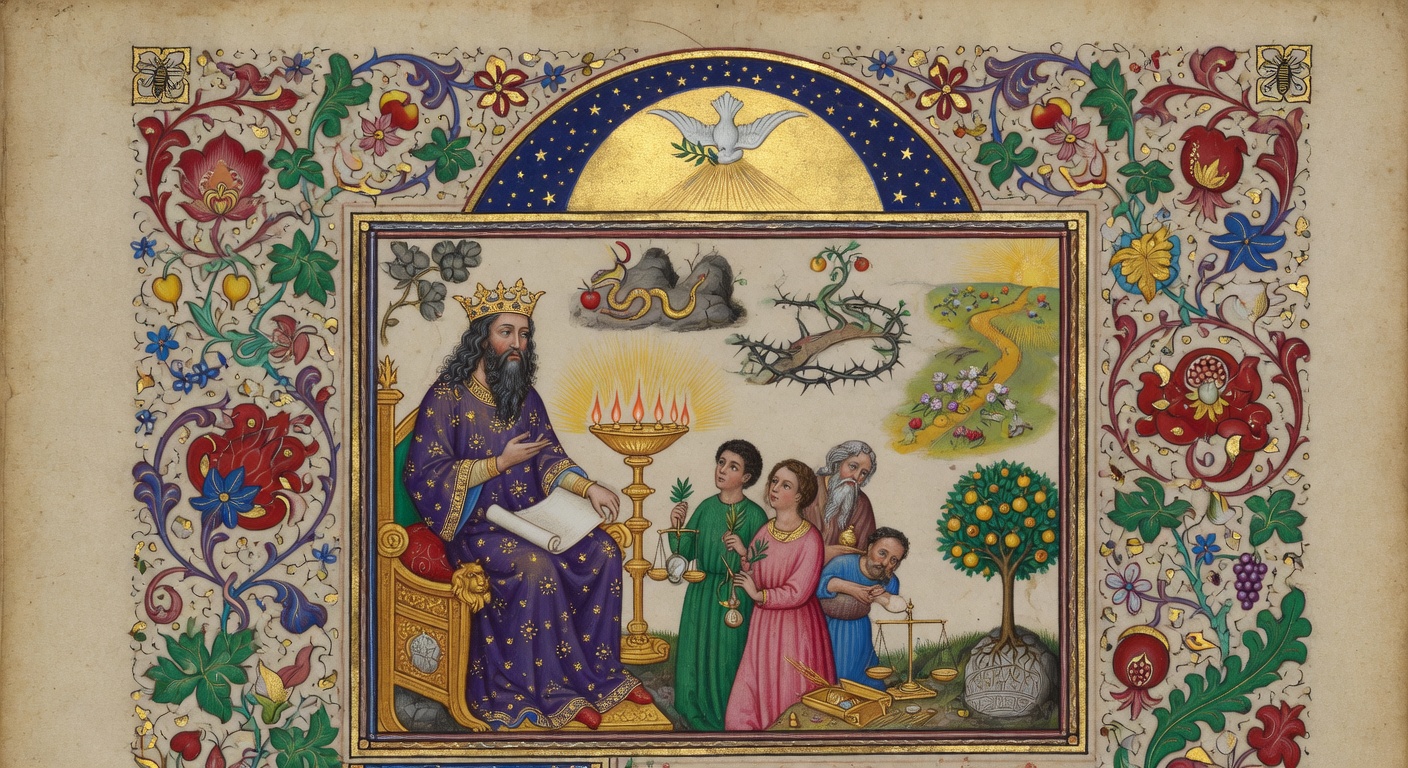
 1 GOOD name is rather to be chosen than great riches, and loving favour rather than silver and gold.
2 The rich and poor meet together: the LORD is the maker of them all.
3 A prudent man foreseeth the evil, and hideth himself: but the simple pass on, and are punished.
4 By humility and the fear of the LORD are riches, and honour, and life.
5 Thorns and snares are in the way of the froward: he that doth keep his soul shall be far from them.
6 Train up a child in the way he should go: and when he is old, he will not depart from it.
7 The rich ruleth over the poor, and the borrower is servant to the lender.
8 He that soweth iniquity shall reap vanity: and the rod of his anger shall fail.
9 He that hath a bountiful eye shall be blessed; for he giveth of his bread to the poor.
10 Cast out the scorner, and contention shall go out; yea, strife and reproach shall cease.
11 He that loveth pureness of heart, for the grace of his lips the king shall be his friend.
12 The eyes of the LORD preserve knowledge, and he overthroweth the words of the transgressor.
13 The slothful man saith, There is a lion without, I shall be slain in the streets.
14 The mouth of strange women is a deep pit: he that is abhorred of the LORD shall fall therein.
15 Foolishness is bound in the heart of a child; but the rod of correction shall drive it far from him.
16 He that oppresseth the poor to increase his riches, and he that giveth to the rich, shall surely come to want.
17 Bow down thine ear, and hear the words of the wise, and apply thine heart unto my knowledge.
18 For it is a pleasant thing if thou keep them within thee; they shall withal be fitted in thy lips.
19 That thy trust may be in the LORD, I have made known to thee this day, even to thee.
20 Have not I written to thee excellent things in counsels and knowledge,
21 That I might make thee know the certainty of the words of truth; that thou mightest answer the words of truth to them that send unto thee?
22 Rob not the poor, because he is poor: neither oppress the afflicted in the gate:
23 For the LORD will plead their cause, and spoil the soul of those that spoiled them.
24 Make no friendship with an angry man; and with a furious man thou shalt not go:
25 Lest thou learn his ways, and get a snare to thy soul.
26 Be not thou one of them that strike hands, or of them that are sureties for debts.
27 If thou hast nothing to pay, why should he take away thy bed from under thee?
28 Remove not the ancient landmark, which thy fathers have set.
29 Seest thou a man diligent in his business? he shall stand before kings; he shall not stand before mean men.
← → arrow keys to navigate chapters · spacebar to play/pause audio
Did You Know?
The section beginning at 22:17 introduces a distinct collection of thirty sayings modeled on the Egyptian Instruction of Amenemope, evidencing direct literary borrowing from New Kingdom wisdom traditions.
Verse 2’s declaration that rich and poor “meet together” because the Lord made them both functions as a theological critique of ancient Near Eastern social stratification, grounding human equality in creation rather than royal decree.
The warning in verse 28 against removing the ancient landmark echoes precise property-boundary statutes found in both the Code of Hammurabi and Israelite covenant law, revealing wisdom literature’s integration of legal norms.
Proverbs 22:6’s command to “train up” a child employs the rare Hebrew verb ḥănōk, whose root also denotes dedicatory initiation, suggesting the proverb envisions early covenantal consecration rather than mere moral instruction.
Verse 29’s promise that the diligent will stand before kings subtly subverts rigid hereditary court structures of the ancient world by presenting wisdom as an alternative path to royal access.
Solomon's throne, overlaid with gold and ivory, featured six steps flanked by twelve lions symbolizing the tribes of Israel and incorporated a calf-shaped seat back, making it a unique artifact unmatched by any other royal throne of the era.
Jonathan sealed his covenant with David by giving him his royal robe, armor, sword, bow, and belt, ritually transferring symbols of kingship despite being Saul's heir.