Adamic/Edenic Covenant
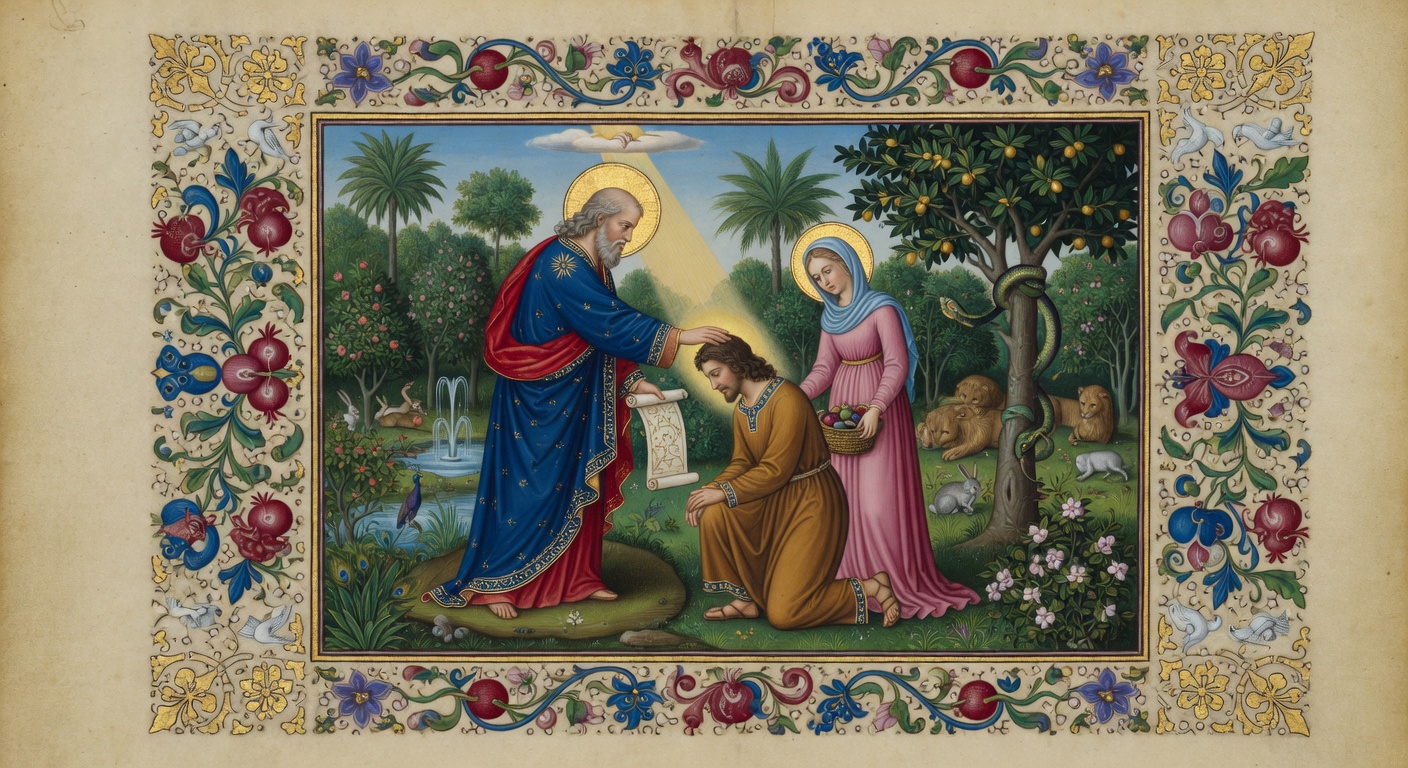
God established his first covenant with Adam as the federal head of humanity, entrusting him with dominion over the creatures of the earth and the care of the Garden of Eden. This sacred bond carried the command to be fruitful and multiply while forbidding the eating of the tree of knowledge, thereby defining the terms of life and fellowship with the Creator. In the broader redemptive narrative, this Edenic arrangement reveals humanity's original dignity and purpose, which the fall would disrupt and later covenants would seek to restore.
Covenant Details
- Parties
- God and Adam (representing all humanity)
Key Chapters
Key Passages
Dominion Mandate
Genesis 1:28-30
God entrusts humanity with stewardship over all creation, establishing the foundational relationship between Creator and creature - one of generous provision and delegated authority.
 28nd God blessed them, and God said unto them, Be fruitful, and multiply, and replenish the earth, and subdue it: and have dominion over the fish of the sea, and over the fowl of the air, and over every living thing that moveth upon the earth.
Garden Command
Genesis 2:15-17
The single prohibition reveals that even in paradise, the covenant relationship requires trust and obedience. The tree of knowledge represents the boundary between divine and human prerogative.
15nd the LORD God took the man, and put him into the garden of Eden to dress it and to keep it.
Did You Know?
The first covenant was not a contract between equals. God gave commands and promises to Adam before the fall. The relationship was based on God's generosity and Adam's trusting obedience.
The covenant in Eden included both blessing and consequence. "In the day you eat of it you shall surely die." The covenant structure of command, blessing, and curse runs throughout Scripture.
The Adamic covenant was broken by man. Every subsequent covenant would have to deal with the problem of a covenant-breaking people. The solution would ultimately require a covenant-keeping Substitute.