Battle of Carchemish

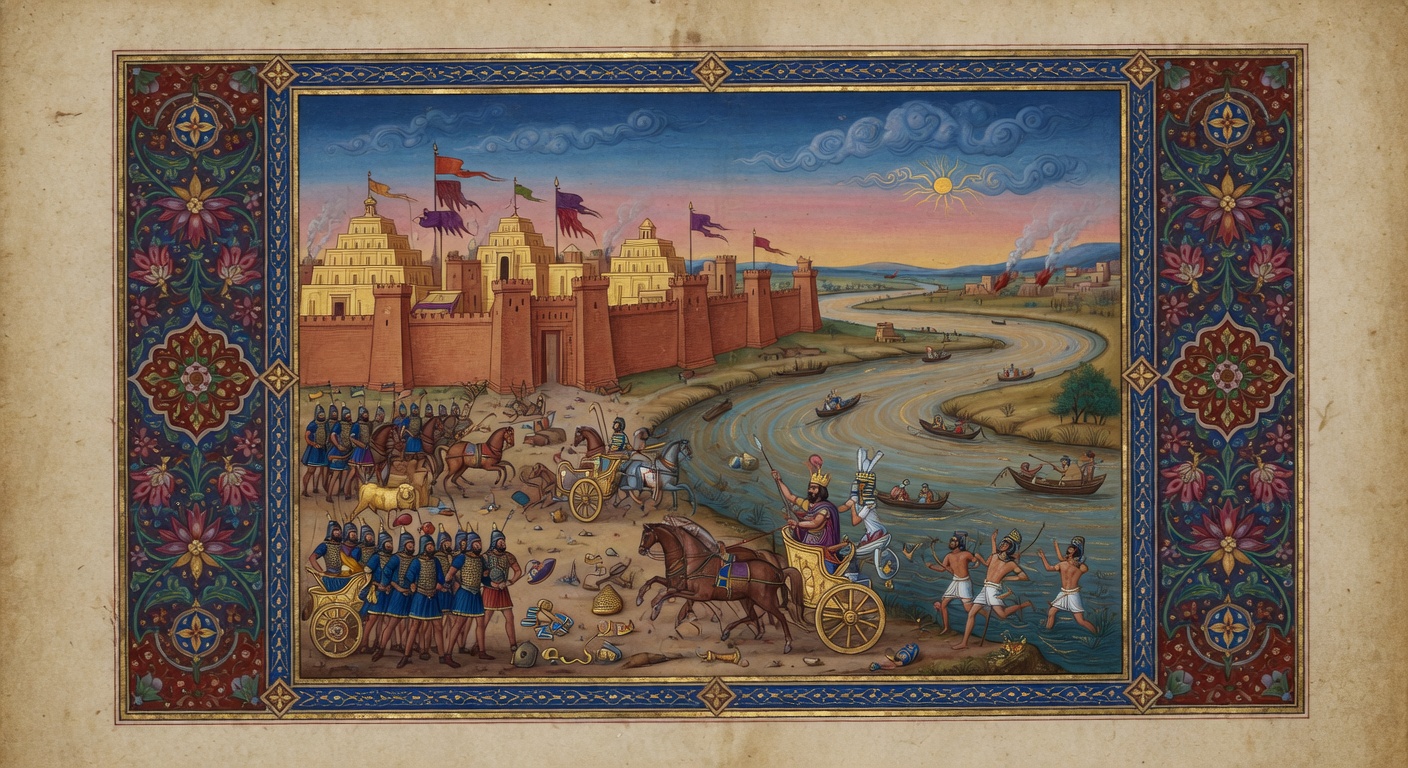
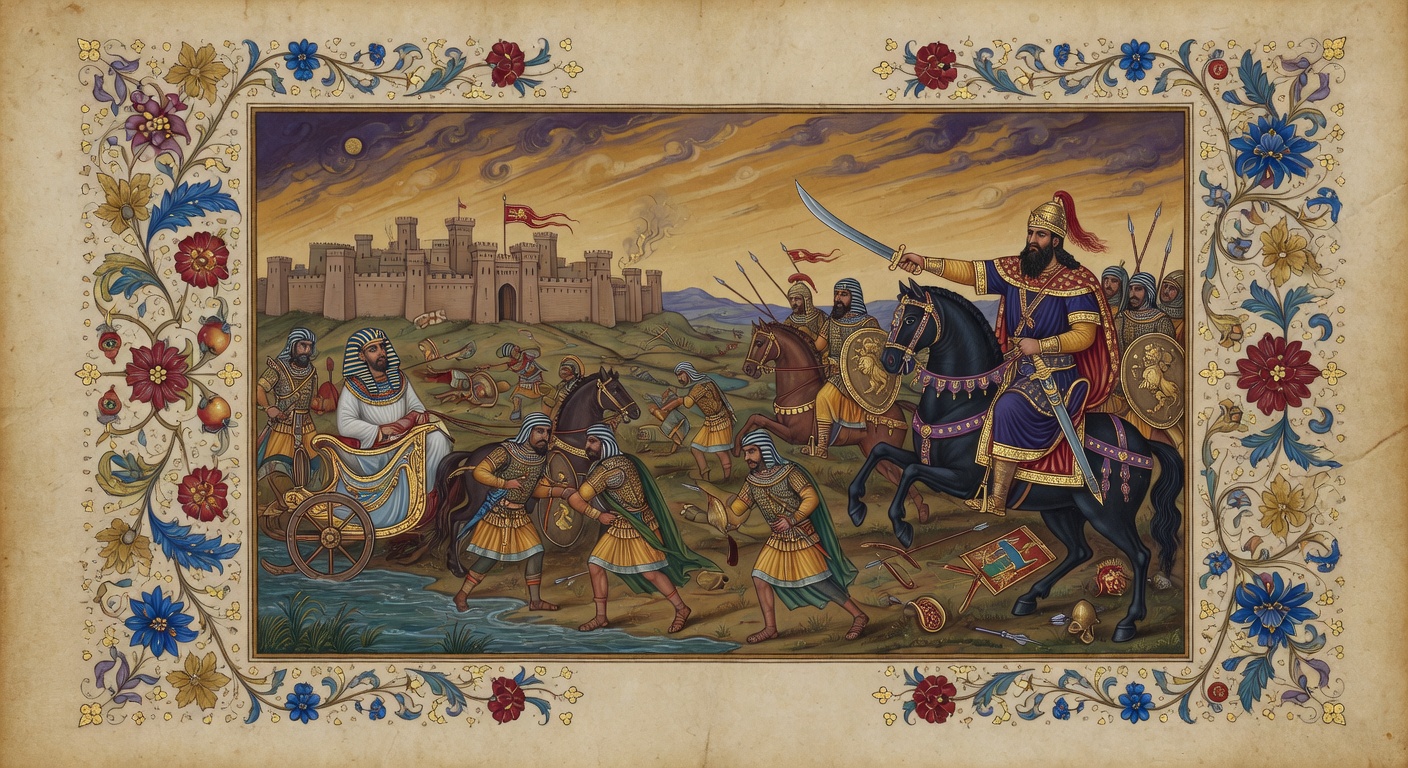
On the banks of the Euphrates, Babylon crushed the army of Egypt. Jeremiah called it the day of the LORD's vengeance, and Judah was left in Babylon's shadow.
In the fourth year of Jehoiakim king of Judah, Nebuchadnezzar of Babylon defeated the army of Pharaoh Necho of Egypt at Carchemish by the river Euphrates. Jeremiah's oracle against Egypt pictures the battle vividly: Egypt rising like a flood with horses, chariots, and allies, and then its mighty men dismayed, beaten down, and stumbling toward the north by the Euphrates. The prophet calls it 'the day of the Lord GOD of hosts, a day of vengeance'. The result reshaped the region. Second Kings records that the king of Egypt came out of his land no more, for the king of Babylon had taken everything from the river of Egypt to the Euphrates. Judah now lay in Babylon's shadow, and the exile Jeremiah had foretold drew near.
Details
- Era
- Divided Kingdom
- Category
- Divided Kingdom
- Participants
- Babylon (Nebuchadnezzar) vs. Egypt (Pharaoh Necho)
- Outcome
- Egypt routed by Babylon, ending Egypt's power in the region
- Divine Intervention
- No
Key Chapters
Key Passages
Jeremiah's Oracle Against Egypt
Jeremiah 46:2-12
Jeremiah portrays Egypt's proud advance and sudden collapse as the day of the LORD's vengeance by the Euphrates.
 2gainst Egypt, against the army of Pharaohnecho king of Egypt, which was by the river Euphrates in Carchemish, which Nebuchadrezzar king of Babylon smote in the fourth year of Jehoiakim the son of Josiah king of Judah.
Egypt Came Not Again
2 Kings 24:7
A single verse sums up the outcome: Babylon now ruled everything from the river of Egypt to the Euphrates.
7nd the king of Egypt came not again any more out of his land: for the king of Babylon had taken from the river of Egypt unto the river Euphrates all that pertained to the king of Egypt.
Explore Related


Did You Know?
Jeremiah dates it to the fourth year of Jehoiakim.
It was the same Pharaoh Necho who had killed King Josiah at Megiddo (2 Kings 23:29).
Jeremiah taunts Egypt: 'Go up into Gilead, and take balm, O virgin, the daughter of Egypt: in vain shalt thou use many medicines.'
The same year Jeremiah dictated his prophecies to Baruch (Jeremiah 36:1-4).