Fall of Samaria (722 BC)
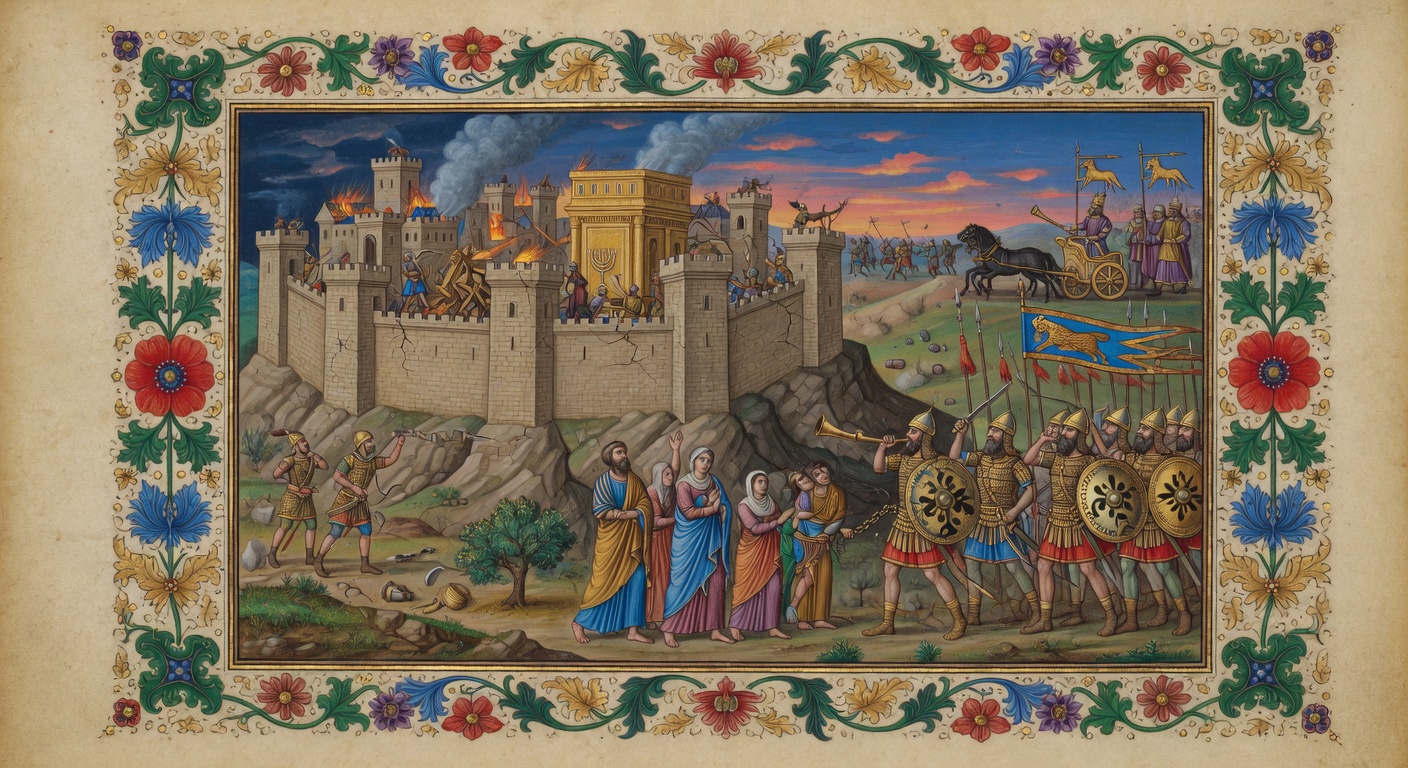
After 200 years of idolatry, the northern kingdom fell to Assyria in 722 BC. The ten tribes were scattered and never returned - a warning that God's patience, though vast, has limits.
The Fall of Samaria in 722 BC marked the conquest of the northern kingdom of Israel by the Assyrian Empire under Shalmaneser V and Sargon II. After a three-year siege of the capital, the Assyrians captured the city and deported much of the population to Mesopotamia and Media, replacing them with foreign settlers to prevent future revolts. This event ended the independent northern kingdom, scattered the ten tribes into assimilation, and fulfilled prophetic warnings of judgment recorded in 2 Kings 17 for the nation's idolatry and covenant violations. In Scripture it underscores God's sovereignty over empires and serves as a lasting warning to Judah and later readers about the consequences of unfaithfulness.
Details
- Era
- Divided Kingdom
- Category
- Divided Kingdom
- Participants
- Assyria vs. Israel (Northern Kingdom)
- Outcome
- Northern kingdom destroyed, 10 tribes exiled
- Divine Intervention
- No
Key Chapters
Key Passages
The Fall
2 Kings 17:5-6
This passage shows how persistent unfaithfulness brings painful consequences, gently urging us to stay close and obedient to God.
 5hen the king of Assyria came up throughout all the land, and went up to Samaria, and besieged it three years.
Did You Know?
The Assyrians deported the ten northern tribes and resettled foreigners in their land - creating the Samaritans.
The northern kingdom lasted about 200 years with 19 kings - every single one was evil.
Archaeologists found Assyrian records confirming the siege and deportation of Israel.