Hosea 14 KJV
A Call to Return to the Lord
A Call to Return to the Lord
The chapter concludes with a wisdom proverb (v.9) that functions as an interpretive key for the entire book, inviting readers to discern how God's 'ways' encompass both judgment and mercy in a manner akin to Proverbs rather than typical prophecy.
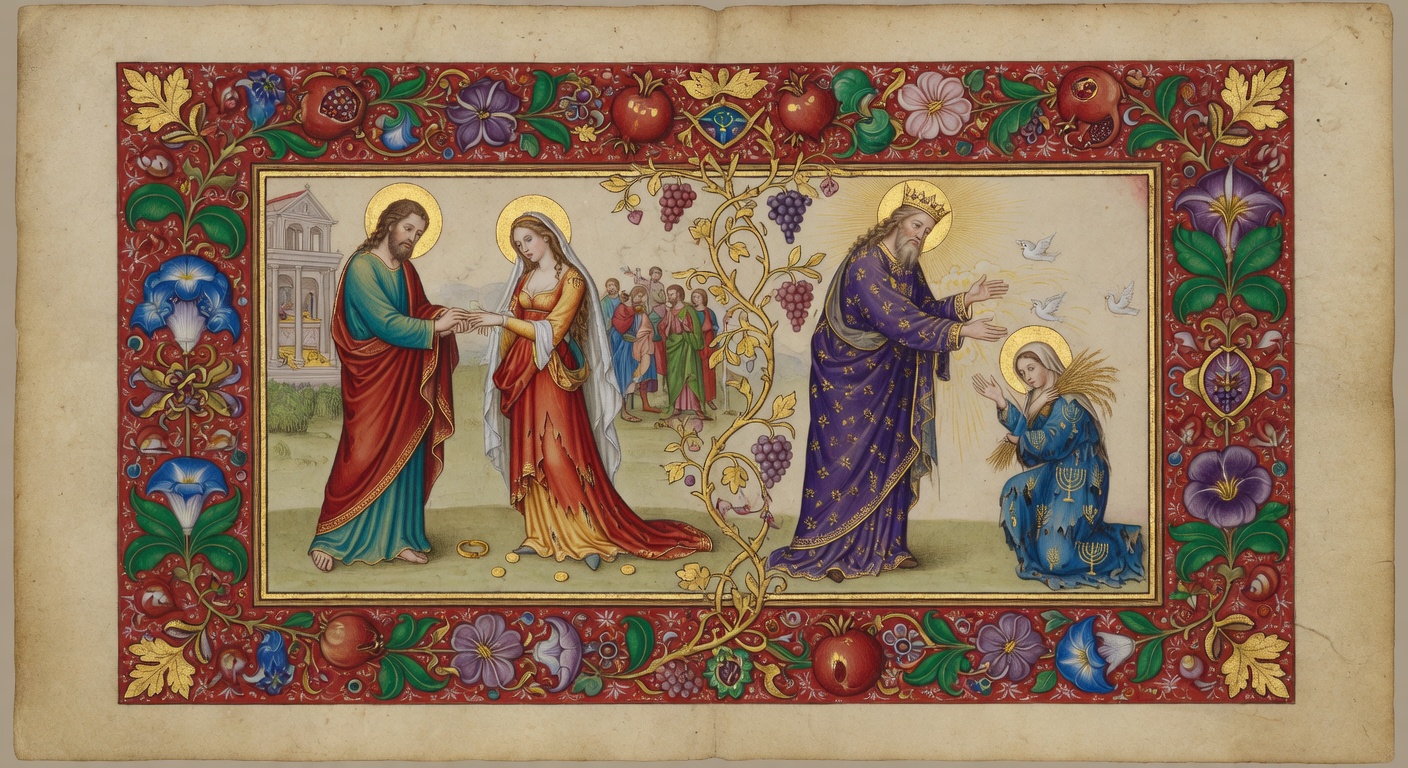
 1 Israel, return unto the LORD thy God; for thou hast fallen by thine iniquity.
2 Take with you words, and turn to the LORD: say unto him, Take away all iniquity, and receive us graciously: so will we render the calves of our lips.
3 Asshur shall not save us; we will not ride upon horses: neither will we say any more to the work of our hands, Ye are our gods: for in thee the fatherless findeth mercy.
4 I will heal their backsliding, I will love them freely: for mine anger is turned away from him.
5 I will be as the dew unto Israel: he shall grow as the lily, and cast forth his roots as Lebanon.
6 His branches shall spread, and his beauty shall be as the olive tree, and his smell as Lebanon.
7 They that dwell under his shadow shall return; they shall revive as the corn, and grow as the vine: the scent thereof shall be as the wine of Lebanon.
8 Ephraim shall say, What have I to do any more with idols? I have heard him, and observed him: I am like a green fir tree. From me is thy fruit found.
9 Who is wise, and he shall understand these things? prudent, and he shall know them? for the ways of the LORD are right, and the just shall walk in them: but the transgressors shall fall therein.
← → arrow keys to navigate chapters · spacebar to play/pause audio
Did You Know?
The chapter concludes with a wisdom proverb (v.9) that functions as an interpretive key for the entire book, inviting readers to discern how God's 'ways' encompass both judgment and mercy in a manner akin to Proverbs rather than typical prophecy.
God's declaration to 'love them freely' (v.4) underscores unconditioned grace that bypasses any requirement for prior repentance or cultic offering, creating a theological tension with the Torah's emphasis on covenant obedience.
The promise of healing backsliding and restoring growth through dew imagery (v.5) directly reverses Hosea's earlier drought and withering motifs (e.g., 13:15), transforming arid judgment into life-giving fertility without human mediation.
By instructing Israel to 'take with you words' rather than sacrifices (v.2), the text elevates verbal confession as the sole acceptable return, anticipating later Jewish liturgical practices like the vidui while diminishing temple ritual.
The specific flora and geography. Lilies, Lebanon cedars, olive trees, and grain. Evoke Canaanite fertility cults yet redirect them exclusively toward Yahweh, subverting syncretistic worship that Hosea condemns throughout the book.
The final chapter of Hosea employs rare agricultural imagery of God as dew to Israel and a cypress tree, promising future healing of apostasy rather than the dominant judgment themes found throughout the rest of the book.
Longstanding ethnic and religious tensions led Jews to avoid travel through Samaria and to view its inhabitants with hostility and suspicion.
The Nile River was worshipped as a god. Making the plague of blood a direct challenge to Egyptian religion.
Commentary & Study Notes Jamieson-Fausset-Brown (1871) · Public Domain fallen by thine iniquity — (Ho 5:5; 13:9).
Classic verse-by-verse commentary on Hosea 14 from Jamieson, Fausset & Brown (1871). Covers: God's promise of blessing, on their repentance: their abandonment of idolatry foretold: the conclusion of the whole, the just shall walk in God's ways, but the transgressor shall fall therein.
- 1
- fallen by thine iniquity — (Ho 5:5; 13:9).
- 2
- Take with you words — instead of sacrifices, namely, the words of penitence here put in your mouths by God. "Words," in Hebrew, mean "realities," there being the same term for "words" and "things"; so God implies, He will not accept empty professions (Ps 78:36; Isa 29:13). He does not ask costly sacrifices, but words of heartfelt penitence. receive us graciously — literally "(for) good." calves of our lips — that is, instead of sacrifices of calves, which we cannot offer to Thee in exile, we present the praises of our lips. Thus the exile, wherein the temple service ceased, prepared the way for the gospel time when the types of the animal sacrifices of the Old Testament being realized in Christ's perfect sacrifice once for all, "the sacrifice of praise to God continually that is the fruit of our lips" (Heb 13:14) takes their place in the New Testament.
Read all 9 notes on Hosea 14 →