Proverbs 16 KJV
The Lord Directs Our Steps
The Lord Directs Our Steps
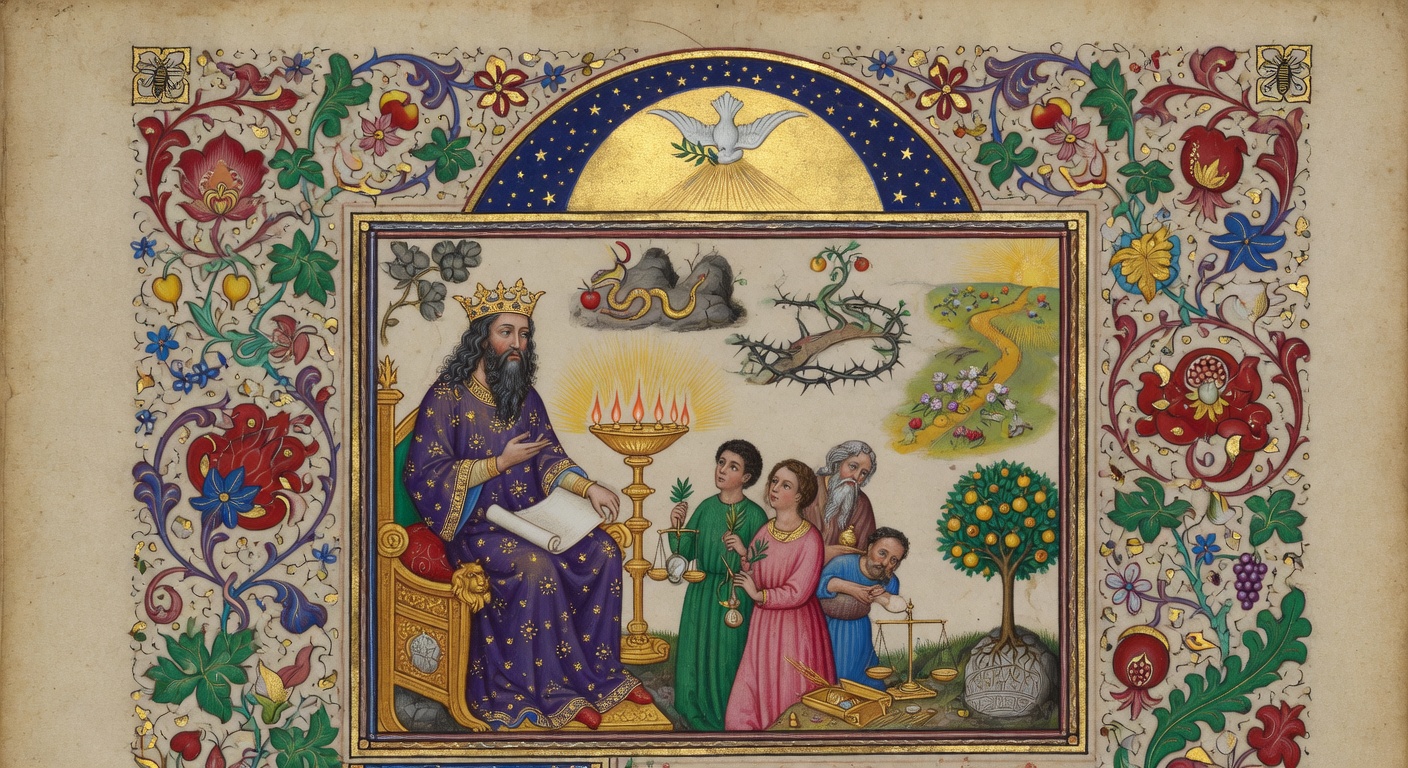
The chapter frames kingship under divine scrutiny by declaring a king's throne established through righteousness and that his lips must not transgress in judgment, echoing ANE royal ideologies while subordinating the monarch to Yahweh's moral order.
 1he preparations of the heart in man, and the answer of the tongue, is from the LORD.
2 All the ways of a man are clean in his own eyes; but the LORD weigheth the spirits.
3 Commit thy works unto the LORD, and thy thoughts shall be established.
4 The LORD hath made all things for himself: yea, even the wicked for the day of evil.
5 Every one that is proud in heart is an abomination to the LORD: though hand join in hand, he shall not be unpunished.
6 By mercy and truth iniquity is purged: and by the fear of the LORD men depart from evil.
7 When a man’s ways please the LORD, he maketh even his enemies to be at peace with him.
8 Better is a little with righteousness than great revenues without right.
9 A man’s heart deviseth his way: but the LORD directeth his steps.
10 A divine sentence is in the lips of the king: his mouth transgresseth not in judgment.
11 A just weight and balance are the LORD’s: all the weights of the bag are his work.
12 It is an abomination to kings to commit wickedness: for the throne is established by righteousness.
13 Righteous lips are the delight of kings; and they love him that speaketh right.
14 The wrath of a king is as messengers of death: but a wise man will pacify it.
15 In the light of the king’s countenance is life; and his favour is as a cloud of the latter rain.
16 How much better is it to get wisdom than gold! and to get understanding rather to be chosen than silver!
17 The highway of the upright is to depart from evil: he that keepeth his way preserveth his soul.
18 Pride goeth before destruction, and an haughty spirit before a fall.
19 Better it is to be of an humble spirit with the lowly, than to divide the spoil with the proud.
20 He that handleth a matter wisely shall find good: and whoso trusteth in the LORD, happy is he.
21 The wise in heart shall be called prudent: and the sweetness of the lips increaseth learning.
22 Understanding is a wellspring of life unto him that hath it: but the instruction of fools is folly.
23 The heart of the wise teacheth his mouth, and addeth learning to his lips.
24 Pleasant words are as an honeycomb, sweet to the soul, and health to the bones.
25 There is a way that seemeth right unto a man, but the end thereof are the ways of death.
26 He that laboureth laboureth for himself; for his mouth craveth it of him.
27 An ungodly man diggeth up evil: and in his lips there is as a burning fire.
28 A froward man soweth strife: and a whisperer separateth chief friends.
29 A violent man enticeth his neighbour, and leadeth him into the way that is not good.
30 He shutteth his eyes to devise froward things: moving his lips he bringeth evil to pass.
31 The hoary head is a crown of glory, if it be found in the way of righteousness.
32 He that is slow to anger is better than the mighty; and he that ruleth his spirit than he that taketh a city.
33 The lot is cast into the lap; but the whole disposing thereof is of the LORD.
← → arrow keys to navigate chapters · spacebar to play/pause audio
Did You Know?
The chapter frames kingship under divine scrutiny by declaring a king's throne established through righteousness and that his lips must not transgress in judgment, echoing ANE royal ideologies while subordinating the monarch to Yahweh's moral order.
Verse 2's image of the Lord weighing the spirits adapts the Egyptian heart-weighing ceremony from the Book of the Dead, replacing Ma'at's balance with Yahweh's direct moral evaluation of motives rather than ritual purity.
Proverbs 16:15 likens the king's favor to 'a cloud of the latter rain,' merging agricultural fertility imagery with royal power in a way that subtly critiques absolutist monarchy by tying prosperity to divine pleasure.
The progression from human planning in verses 1-3 to the casting of lots in verse 33 creates a literary inclusio that moves from internal intentions to external randomness, underscoring providence over both deliberate schemes and apparent chance.
Verse 7's promise that pleasing the Lord makes even enemies live at peace inverts typical wisdom motifs of conflict, implying a theological ethic where righteousness functions as supernatural diplomacy rather than mere prudence.
Biblical tradition attributes 3,000 proverbs and 1,005 songs to Solomon, along with expertise in botany and zoology covering everything from cedar trees to hyssop and from livestock to birds, fish, and reptiles, yet only fragments survive in Proverbs, Ecclesiastes, and Song of Songs.
David purchased Araunah the Jebusite's threshing floor for fifty shekels of silver after the plague halted, establishing the exact site that later became the Temple Mount under Solomon.